Lab EMI & Acoustic Modeling & Design

Engineering Confidence in Your Design: EMI & Acoustic Modeling That Delivers Clarity

Make informed decisions about your laboratory design. Prevent electromagnetic & acoustic interference issues before they happen. Let our engineering consulting team guide your design decisions with precision.

Ready to Design with Confidence?

EMI Modeling Form

EMI Modeling Services

At VEC, we specialize in high-resolution magnetic field modeling and simulation to help you identify, predict, and mitigate electromagnetic interference (EMI) issues. Our EMI consulting services support your project from early-stage planning through post-installation validation, helping you build environments that support sensitive equipment and meet project specs.

Whether you're in the design development phase or refining a completed plan, our EMI Modeling approach provides the confidence you need to move forward.

AC EMI Modeling

We utilize 3D finite element analysis, with a resolution of up to 0.1 m, and cross-check them against field-validated data and in-house testing to provide a model of the AC electromagnetic fields within the facility. These models allow us to:

• Visualize interference from electrical sources
• Provide recommendations regarding electrical equipment placement and conduit routing
• Evaluate the effectiveness of shielding (EMT, RMC, etc.)
• Compare shielded vs. unshielded scenarios
• Recommend mitigation strategies tailored to your site and equipment

Note: Each model is computationally intensive and can take up to 48 hours to run. That’s why we stay in close communication throughout the process to ensure accuracy and adaptability.

DC EMI Modeling

VEC has compiled a proprietary database of elevator-related DC magnetic field data, enabling us to simulate DC EMI fields from both freight and passenger elevators. Our team creates DC EMI maps to visualize field strengths and assess their impact on planned equipment locations, helping to ensure that sensitive tools operate without disruption.

Acoustic Modeling Services

VEC helps design low-noise rooms and labs to meet acoustic noise requirements for precision instruments, addressing challenges posed by industrial equipment and stringent specifications.

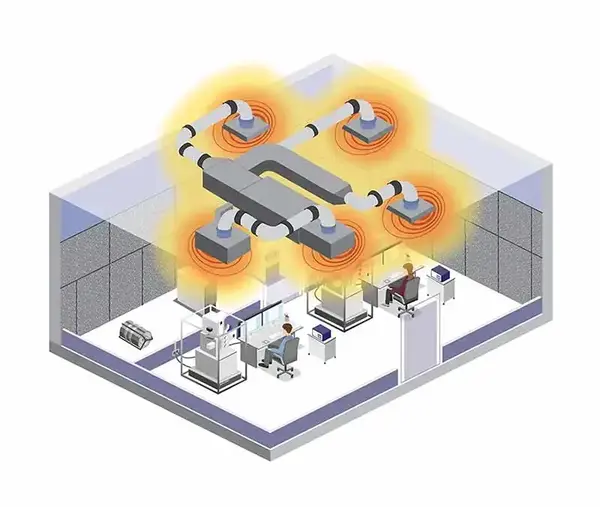
HVAC Supply and Return Noise


HVAC systems are typically the primary source of room noise, influenced by complex factors like equipment selection, ducting layout, sizing, and register choice. VEC models and guides your lab's HVAC supply and return noise, estimating levels in alignment with your instrument's acoustic specifications.

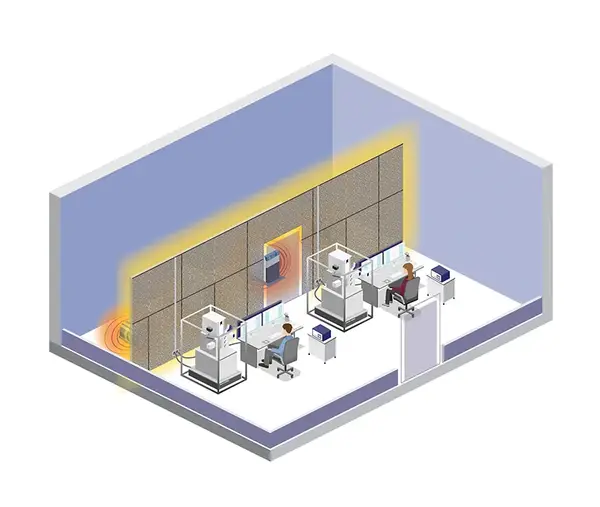
Wall Transmission Analysis


Blocking noise from adjacent rooms from entering the laboratory is another critical component of noise control. VEC can model the noise transmission of proposed walls and guide changes to wall construction based on modeled results.

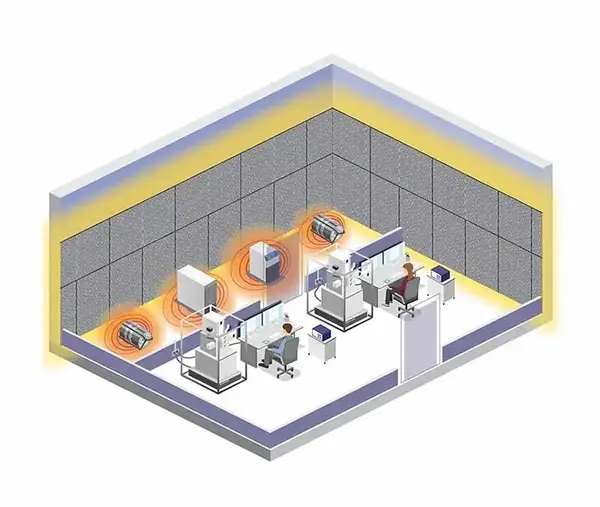
Reverberant Noise
(Sabine Calculation) 


Reverberant noise is a room's echo or "liveliness," determined by sound bouncing off walls, floor, and ceiling. Labs aim for minimal reverberant noise. VEC uses Sabine Calculation to assess and reduce a room's reverberant noise with acoustic absorption materials.

External Mechanical Equipment

Industrial projects often depend on many significant sources of mechanical acoustic noise to support power generation and other critical infrastructure functions. VEC can help ensure you comply with local codes and ordinances during your project.

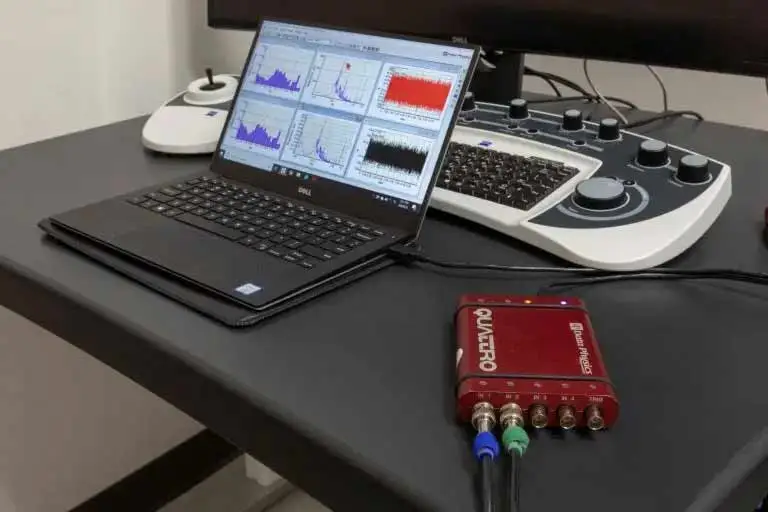
Measure noise of existing equipment and ambient noise conditions

Critical to modeling the impact of future mechanical equipment is quantifying the current levels of acoustic noise on a site. VEC typically achieves this with on-site testing based on local ordinance requirements and equipment use.

Mechanical Noise Source Addition

Determining the total noise of equipment, planned and existing, at your facility is critical to determining the noise at the property line. VEC uses site testing data and manufacturer-provided data sheets to conduct this analysis.


Calculate noise at the Property Line and Compare it to Local Noise Ordinances

VEC will take the noise from each equipment or group of equipment and determine the noise levels at the property line or point of interest. VEC will account for any noise barriers in the calculation and, if required, make recommendations to determine compliance with local noise ordinances.

What a typical project looks like

Industrial projects often depend on many significant sources of mechanical acoustic noise to support power generation and other critical infrastructure functions. VEC can help ensure you comply with local codes and ordinances during your project.

What a typical project looks like

We know that every buildout is unique. Our approach to magnetic field design is tailored to your specific equipment, environment, and goals. Here’s what a typical VEC EMI project includes:

1. Review site drawings & instrument/equipment list
2. Perform baseline AC/DC field testing
3. Collaborate with your electrical engineering team to build a 3D model based on planned electrical loads
4. Integrate VEC recommendations into the electrical design
5. Evaluate the cost-benefit of mitigation strategies such as passive shielding or active magnetic field cancellation
6. Provide detailed construction drawings or coordinate with shielding vendors
7. Conduct post-installation site testing to confirm field levels meet equipment requirements

We provide turnkey EMI consulting services that ensure compliance, performance, and peace of mind—before and after installation.

What We Need From You

To build a reliable and accurate EMI model, we ask for the following:

• Electrical blueprints per floor
• Wire types, sizes, amperage, and shielding
• Planned conduit routing
• Distribution panels and transformer specs/locations
• Passive shielding locations
• Building dimensions, especially floor heights and tool locations
• On-site testing is helpful to quantify ambient magnetic field levels
• (Optional but helpful): Locations and specs for any tools or instruments being installed

💡 Good news: We don’t require lighting panel details, as they produce negligible EMI.
What You Get From VEC

At the conclusion of your project, you'll receive a comprehensive EMI modeling report designed to support clear decision-making and project documentation. Reports include:

• Executive Summary & Recommendations
• Modeling Assumptions + Potential Sources of Deviation
• Modeled EMI Field Results for discussed Scenarios
• Tool Specifications & Required Mitigation Plans
• Side-by-side model visuals for informed decision-making

Our reports are trusted by engineers, architects, and key stakeholders across industries to validate EMI design decisions and avoid costly redesigns.